Behind the data center construction frenzy powering the artificial intelligence industry lies a web of debt, shadow banking, and financial engineering that few people are paying attention to.
The conventional wisdom about surviving a gold rush is to sell the picks and shovels rather than dig for gold. Applied to the AI boom, the logic says that the safest bet isn't in the AI models themselves but in the physical infrastructure that makes them possible: the data centers, the chips, the electricity. Nvidia is the most obvious example of a company that has profited from this position. Oracle is another, though its story has taken a significantly more complicated turn.
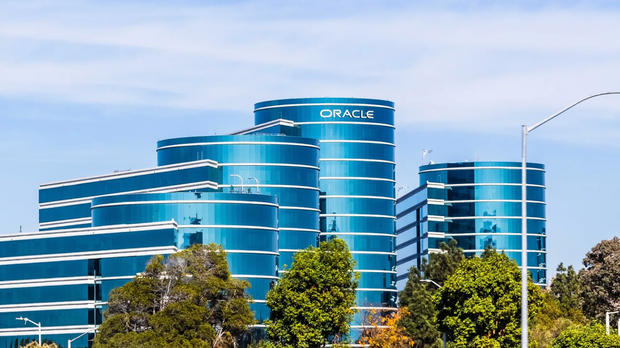
In September 2025, Oracle signed a $300 billion infrastructure deal with OpenAI to build some of the country's largest AI data centers. The announcement sent Oracle's stock up more than a third in a single day, briefly making CEO Larry Ellison the wealthiest person in the world. Since then, the stock has fallen more than 40%, erasing those gains and then some. The market for instruments that allow investors to bet on Oracle missing its debt payments has surged. Its credit rating hovers just above junk status.
Oracle has become, in the eyes of a growing number of financial analysts, a canary in a coal mine for the AI infrastructure boom, and what it's signaling is worth understanding.
The Balance Sheet Problem
The core issue at Oracle is straightforward even if the financial structure surrounding it is not. The company has committed to building enormous amounts of data center capacity before the revenue from those data centers arrives. That means it has to borrow heavily upfront, carry that debt on its books, and hope the contracted revenue materializes on schedule and in full.
Oracle now carries more than $160 billion in outstanding liabilities, with a debt-to-equity ratio approaching 415%. For comparison, none of the other major cloud and data center operators, including Amazon, Meta, Google, and Microsoft, exceed 80%. Those companies have massive non-AI revenue streams generating cash that can absorb capital spending. Oracle arrived late to cloud infrastructure and has been trying to compress years of buildout into a very short window using borrowed money rather than cash reserves.
The concentration of risk makes the picture more acute. A majority of Oracle's contracted backlog is tied to a single customer: OpenAI, a company that is itself reportedly losing money at a significant rate and burning through cash at a pace that raises legitimate questions about its long-term ability to meet its infrastructure commitments. Oracle has effectively become the publicly traded proxy for OpenAI, a company that most investors cannot yet buy directly. That dynamic is part of what drove the initial stock surge. It is also what makes the downside particularly exposed.
How the Debt Is Actually Structured
To understand why this matters beyond Oracle itself, it helps to understand how the money actually flows through the AI data center ecosystem, because much of it moves through channels that are deliberately designed to stay off corporate balance sheets.
The dominant financing structure is the special purpose vehicle, or SPV. A holding company is created, typically by a data center developer or the tech company itself, and banks and private lenders provide financing to that SPV rather than directly to the tech company. The tech company then leases the finished facility back from the SPV. Because the debt sits on the SPV's books rather than the tech company's, it doesn't show up on the company's balance sheet in a way that immediately triggers regulatory scrutiny or credit rating concerns.
Oracle has relied on this structure extensively. Its data center campus in Abilene, Texas, built to serve OpenAI, was financed through an SPV. A separate $38 billion debt package funded two additional facilities in Texas and Wisconsin through similar arrangements. An $18 billion loan financed another site. The SPV structure keeps these obligations in a financial gray zone, visible to sophisticated analysts who know where to look but not immediately apparent in a standard reading of the company's public filings.
A proposed class-action lawsuit filed by Oracle bondholders in January alleged that the company misled investors about the scale of additional financing it would need, pointing to documents from its $18 billion bond sale that suggested only modest future borrowing requirements, followed seven weeks later by a $38 billion additional loan package.
The Shadow Bank Angle
The lenders behind these structures are largely not traditional banks. They are what the financial industry calls alternative asset managers or, less charitably, shadow banks: firms like Blue Owl Capital, Blackstone, and Apollo Global Management that operate similarly to banks but without the same regulatory capital requirements that traditional banks face after the Dodd-Frank reforms following the 2008 financial crisis.
Private credit has grown dramatically over the past decade, with the total amount of private lending more than tripling in five years to roughly $3 trillion. The AI data center boom has been one of its primary fueling mechanisms, with hundreds of billions flowing into infrastructure financing through private lenders who have been attracted by the combination of blue-chip tenants, long-term lease contracts, and high yields.
The argument from private lenders has been that these deals are structured conservatively, backed by long-term take-or-pay contracts with financially strong tenants, meaning the lenders receive fixed monthly payments regardless of whether the facilities are actually fully utilized. That structural protection, the argument goes, insulates them from the downside risks that might apply to more conventional AI investments.
The counterargument arrived in the form of Blue Owl Capital's decision to pull out of a $10 billion Oracle data center financing deal in Michigan. Private lenders specialize in structuring deals to manage risk. When one of the most prominent players in the space declined to proceed despite the substantial fees attached to the deal, it raised an obvious question about what they had concluded about the downside that made it look unmanageable even with all their structural protections.
Blue Owl's stock has fallen significantly over the past year. Blackstone, Apollo, and BlackRock have all halted redemptions on various funds as investor anxiety about private credit exposure has spread. Two recent high-profile bankruptcies, one involving an auto lender and another an auto parts company, have demonstrated that when private lenders miss the signs of deteriorating credit quality, the losses can materialize very quickly.
The Collateral Question
Even setting aside the demand risk, the physical collateral underlying these deals is unusual in ways that deserve more scrutiny than they've received.
When a hyperscaler defaults and lenders are left holding the underlying assets, those assets are primarily the data center building and the chips inside it. The building has relatively conventional real estate value. The chips are more complicated. The AI chips that are being installed in these facilities today are being run continuously at full capacity, which accelerates their physical degradation. New chip generations are being released at a pace that makes current hardware obsolete within a few years. A chip that was cutting-edge infrastructure when the financing was structured may have limited residual value by the time a lender would need to liquidate it.
Some companies, including CoreWeave, have already been using AI chips as collateral for billions in financing, turning assets with a potentially short economic life into the foundation of financial products. If AI demand slows, or if hardware obsolescence accelerates faster than lenders modeled, the value of that collateral could fall well below the debt it's backing.
A Moody's report earlier this year flagged that the major tech companies involved in AI data center construction, including Amazon, Meta, Alphabet, Microsoft, and Oracle, have accumulated more than $660 billion in off-balance-sheet commitments, more than the total debt on their combined balance sheets. The number is large enough that it's difficult to fully process, but the implication is that the financial exposure embedded in the AI infrastructure boom is substantially larger than what conventional balance sheet analysis would suggest.
What It All Adds Up To
None of this means the AI infrastructure boom is necessarily heading for a 2008-style collapse. The tenants signing these long-term contracts are, in most cases, among the most financially powerful companies in the world. The demand for computing infrastructure to power AI development and deployment is real and growing. The people structuring these deals are sophisticated and have strong incentives to protect their downside.
But the combination of factors at play, massive off-balance-sheet debt, heavy concentration in a single counterparty relationship in Oracle's case, lightly regulated shadow bank lenders, AI chips as collateral, and a private credit market that has grown faster than its regulatory framework, represents a set of interlocking risks that are not fully visible in any single company's public disclosures. The Oracle situation has made some of those risks briefly visible. The question financial analysts are now asking is whether Oracle is the exception or the signal.
The words JPMorgan CEO Jamie Dimon offered after two recent private credit blowups have been circulating in financial circles for months: when you see one cockroach, there are probably more.