A company that barely existed four years ago is about to out-earn most of corporate America in a single quarter.
In the summer of 2022, a small AI research company in San Francisco quietly finished training its first artificial intelligence model and decided not to release it. The team wanted more time to test it for safety. They were in no rush. They had no customers.
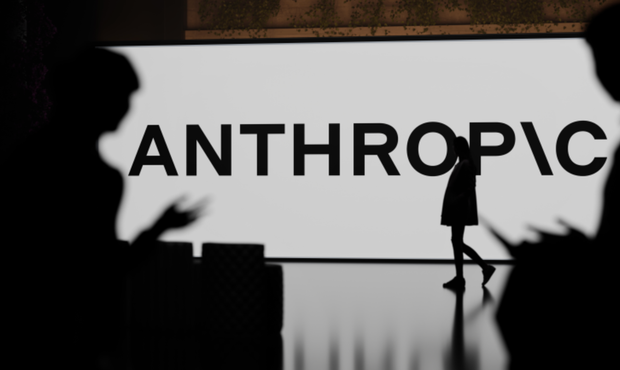
That company was Anthropic. This week, it told investors it expects to generate $10.9 billion in revenue in a single quarter, more than doubling the $4.8 billion it brought in just three months earlier. If the numbers hold, it will also post its first ever operating profit, roughly $559 million for the period. A company that didn't exist in 2020 is about to become one of the fastest-growing businesses in the history of American enterprise software.
Here's what happened in between.
The Breakaway
Anthropic was founded in late 2021 by Dario Amodei, Daniela Amodei, and five other researchers who left OpenAI together. Dario had been OpenAI's VP of Research and one of the key architects of its early language models. The group left over concerns about the direction OpenAI was heading, specifically about whether the company was moving too fast without adequate attention to the safety implications of increasingly powerful AI.
They started Anthropic with a specific thesis: that building safe AI and building capable AI weren't in conflict, and that a company organized around that belief could compete seriously with anyone. They named their AI model Claude, after Claude Shannon, the mathematician considered the father of information theory.
Claude launched publicly in March 2023, about four months after ChatGPT had already captured the world's attention. At that point, OpenAI held roughly 90% of enterprise AI subscription spending among U.S. businesses. Anthropic was a distant, safety-focused challenger that most people outside the tech industry had never heard of.
The Coding Bet
The story of how Anthropic closed that gap runs almost entirely through one product: Claude Code.
Claude Code is an AI coding assistant that lives directly in a developer's terminal, the command-line interface that software engineers use to build and run programs. Rather than being a chatbot you talk to about code, Claude Code actually writes, edits, and executes code on your behalf. It can complete complex, multi-step engineering tasks on its own, the kind of work that would take a human developer hours.
A research preview of the tool launched in early 2025 and spread quickly through engineering communities. When Anthropic released a significantly upgraded version in November 2025, the tool became capable enough to catch and correct its own mistakes without human input. Engineers who had been skeptical began relying on it entirely. Boris Cherny, the Anthropic executive who leads Claude Code, reportedly stopped writing his own code altogether after the update.
By the end of 2025, Claude Code was generating over $1 billion in annualized revenue, a milestone that no comparable enterprise software product had reached that quickly. By early 2026, that figure had more than doubled. Enterprise spending data showed that Claude had captured roughly 70% of AI spending on coding and agentic workflows among U.S. businesses, a complete reversal from where things stood just a year earlier.
The Scale of What's Happening
To understand how unusual Anthropic's trajectory is, it helps to have a comparison. Salesforce, one of the most successful enterprise software companies ever built, took roughly two decades to reach $30 billion in annual revenue. Anthropic crossed that threshold in annualized terms by early April of this year, under three years after its public launch.
Dario Amodei described the pace at a developer conference this month, saying the company had seen 80 times growth in revenue and usage in the first quarter of 2026 alone. He also acknowledged that the speed had created real operational stress, noting that the company had planned for a world of ten times annual growth and instead got eighty.
The investor appetite for all of this has been enormous. Anthropic is currently raising money at a valuation approaching $900 billion, which would make it the most valuable private startup in the world, surpassing OpenAI. A public offering is reportedly being considered as early as October 2026.
The Caveat Worth Knowing
The $10.9 billion figure and the profit projection were shared privately with investors as part of Anthropic's current fundraising round, not through public financial filings. The numbers are unaudited and based on accounting methods that private companies aren't required to reconcile against public reporting standards. That doesn't mean they're wrong, but it means they should be understood as investor projections rather than confirmed results.
There's also the question of sustainability. Anthropic's compute costs, the expense of running the massive server infrastructure needed to power Claude at scale, are significant and growing. Analysts and the company itself have acknowledged that maintaining profitability beyond a single strong quarter will depend on whether revenue growth continues to outpace the cost of serving it. The honest answer is that nobody knows yet.
Why It Matters
The Anthropic story matters beyond the company itself because it represents the clearest evidence so far that AI has crossed from research project into genuine business. When a four-year-old company generates more quarterly revenue than most Fortune 500 firms, something structural is shifting in the economy.
It also reframes the competitive picture in AI in a way that the mainstream conversation hasn't fully caught up to. ChatGPT is still the name most people recognize. But in the high-value enterprise market where businesses actually pay serious money for software, Anthropic has quietly become the company to beat.